One market is not enough
Unlike a power plant, a battery does not produce energy. Its revenue comes from shifting energy in time and offering flexibility to the system. In Türkiye that flexibility can be sold in four places: the energy markets (day-ahead and intraday), the balancing power market, ancillary services and imbalance management. Co-located plants add the support mechanism and curtailed energy.
Each of these markets has a different price, depth and risk. A battery’s value depends on which of them it can access, when, and which market it assigns the same megawatt to in each hour. The investment decision rests not on today’s price in one market but on how that mix will change over ten years.
These four numbers summarise the rest of the article. Storage capacity waiting to connect is measured in tens of gigawatts. The ancillary service markets where batteries earn the highest prices today total roughly one gigawatt.
Access by battery type
The Storage Activities Regulation sorts batteries into four main types by where and by whom they are installed. That distinction largely determines which revenue streams are available.
Summary table. Connection, metering and settlement terms for each type are set out separately in the regulation.
Most of Türkiye’s project pipeline is of the first type: almost all capacity allocated in the 2022 application window went to co-located wind and solar projects. In these projects battery revenue is bounded by support rules and connection capacity. Standalone storage has the freest revenue structure, but no support mechanism to fall back on.
Energy markets: day-ahead and intraday
The best-known revenue stream is arbitrage: charge in cheap hours, discharge in expensive ones. With solar capacity approaching 28 GW, Türkiye’s daily price curve has steepened markedly. In April 2026 the average PTF was 99 TL/MWh at 12:00 and 3,129 TL/MWh at 19:00.
Arbitrage revenue is strongly seasonal. The theoretical net margin of a 1 MW / 4 MWh battery cycling once a day was 1,651 TL/MW·day in December 2025 and 9,663 TL/MW·day in April 2026. We cover that calculation and the split between day-ahead and intraday in this series’ article “How day-ahead and intraday arbitrage shapes battery revenue”.
Battery duration sets the size of this revenue line directly. The average duration of Türkiye’s co-located pipeline is about 1.1 hours. A one-hour battery captures only the single most expensive hour; a four-hour battery covers the whole evening peak. The shorter the duration, the smaller the arbitrage revenue and the larger the share of ancillary services.
Balancing power market
To balance the system in real time, TEİAŞ issues up-regulation (YAL) and down-regulation (YAT) instructions against offers in the balancing power market. The system marginal price (SMF) is formed from the prices of those instructions. When the system is short SMF usually rises above PTF; when it is long it falls below.
A battery is technically well suited to this market: it reaches full power within seconds and can offer in both directions. A down-regulation instruction lets it charge cheaply in a surplus hour. But when and how much will be instructed is not known in advance, so balancing revenue should be treated as an addition to the day-ahead plan rather than the plan itself.
Ancillary services: frequency control
Primary frequency control (PFK) responds automatically to a frequency deviation within seconds. Secondary frequency control (SFK) follows TEİAŞ’s automatic generation control signal and returns frequency to nominal within minutes. In both, the battery is paid an hourly fee for the capacity it reserves; it earns even without selling energy.
Ancillary prices were highly volatile in 2026. The hourly secondary reserve price was below 1,000 TL/MW in early January and above 4,700 TL/MW in the third week of February. The primary price reached 4,728 TL/MW at the end of April, one of its highest levels of the year.
One key rule: reserve held for secondary control cannot be offered in another market or sold bilaterally in the same hour. Assigning capacity to ancillary services means giving up arbitrage and balancing revenue for that hour.
Capacity revenue versus energy revenue
The table below compares the gross revenue 1 MW of capacity earns when assigned to a single use for a whole day. Arbitrage values come from the calculation in this series’ arbitrage article.
Illustrative calculation. Ancillary values are weekly weighted average price × 24 hours, assuming the offer clears in every hour. Activation energy, non-delivery penalties and state-of-charge management are not included. Arbitrage values assume perfect foresight, 85% efficiency and a degradation cost of 350 TL/MWh.
The gap is striking: at today’s prices, assigning a megawatt to frequency control for a full day earns several times the gross revenue of using it for arbitrage. That explains why the first batteries to connect in Türkiye are heading for ancillary services. What the table does not show is how many batteries that revenue can support.
Ancillary prices are high, but the pool is small. The first few hundred megawatts take that price.
The depth problem
The frequency control reserve TEİAŞ procures is limited to what system security requires and does not grow with the number of batteries. In the week of 27 April – 3 May 2026 average hourly secondary reserve was about 942 MW and primary reserve about 274 MW. The co-located pipeline is more than twenty times larger.
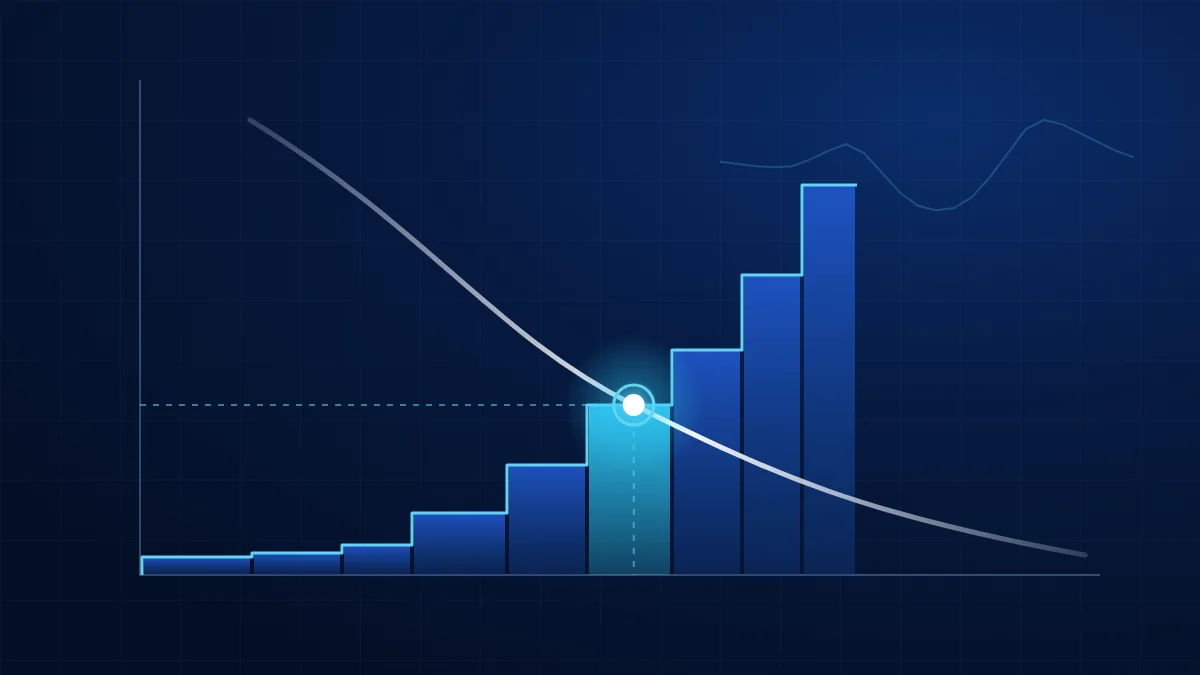
This chart shows that ancillary prices are not permanent. Today these reserves come mainly from hydro and gas plants. As batteries enter, they will bid faster and at lower marginal cost and pull prices down. Once battery capacity reaches several times the reserve requirement, ancillary prices should not be expected to hold at today’s levels.
Feasibility studies should therefore model ancillary revenue not as a flat line but as a curve that falls with storage capacity on the system. Ancillary services may carry most of the revenue in the early years; over the medium term the weight shifts back to the energy markets.
Imbalance and value specific to co-located plants
A battery sharing a connection with a wind or solar plant can cover the plant’s forecast errors in real time and reduce imbalance cost. Since 1 January 2026 imbalance coefficients depend on the system’s direction: 6% for a party deviating with the system, 3% for one deviating against it. That change has raised the value of reducing imbalance.
Co-located plants have two further value lines. The first is capturing output above the connection limit that would otherwise be curtailed; that energy costs nothing to charge. The second is support: energy the plant produces, stores and injects receives YEKDEM. Energy drawn from the grid and injected back does not, and settles at market prices.
These values come with an obligation. In co-located plants the storage unit must be available at 85% of licensed capacity for the first five years after acceptance and 80% thereafter. Chasing revenue every hour must not conflict with that obligation, or support revenue is put at risk.
Managing revenues together
The same megawatt cannot be sold twice in the same hour. A battery’s value comes from allocating its capacity across markets correctly in every hour. Two constraints bound that allocation: the battery’s power and its state of charge.
P_DA,h + P_ID,h + R_PFC,h + R_SFC,h ≤ P_rated
E_min + E_reserve ≤ SoC_h ≤ E_max − E_reserve
The second constraint is often overlooked. A battery holding frequency reserve must keep its state of charge within a band so it can respond in both directions when activated. That band reduces the energy available for arbitrage in the same hours, and the effect is stronger for short-duration batteries.
The investor’s view
Today a battery’s revenue is weighted towards ancillary services. That is a strong start for the first projects to connect. But ancillary revenue is merchant revenue too: its price can move several-fold from week to week and the market is shallow. Modelling it like a long-term contract overstates a project’s value.
A sound feasibility study models each revenue layer separately and in relation to the others: the narrowing of ancillary prices as storage capacity grows, the seasonality and long-term path of the arbitrage spread, and changes in imbalance coefficients and support rules. Battery duration should be an output of that model. A short-duration battery chosen on today’s ancillary prices may lose competitiveness once revenue shifts to the energy markets.
At Frekans we allocate the capacity of the batteries we manage across ancillary services, day-ahead, intraday and balancing every day in a single optimisation. For projects at the investment stage we model each revenue layer together with scenarios tied to the growth of storage capacity.