

Active market management for energy storage
We don't tie your battery to a single market. We assess every revenue stream, from arbitrage to frequency control, hour by hour, and dispatch capacity to wherever it creates the most value.
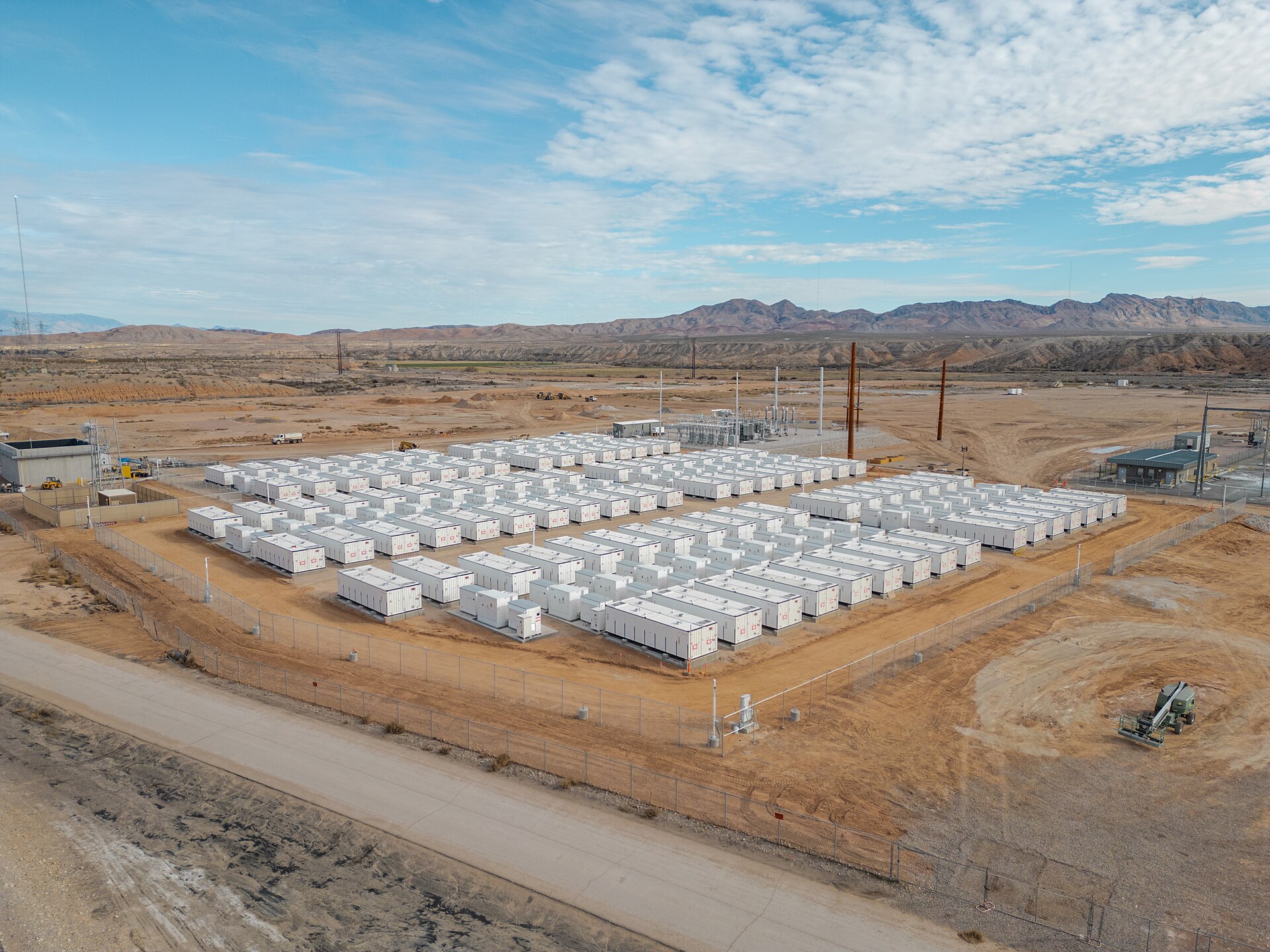
Solar-plus-storage is not a solar plant with a battery bolted on. It is two businesses in one.
On one side is a generation asset with long-term, predictable revenue. On the other is a flexibility asset that has to be re-optimised every hour. Running both well means bringing forecasting, trading and battery operations onto a single desk.
Determining where each MWh of storage capacity is worth most in any given hour, and dispatching the battery accordingly.
One battery, multiple revenue streams
Every morning, the desk faces the same question:
"What is the most valuable use of the battery today?"
The answer changes from day to day, and often from hour to hour.
A battery can't capture every revenue stream in the same hour, so we choose the most valuable use for each one.
Whatever the configuration, we manage generation and storage as a single asset.
Solar-plus-storage
We plan generation forecasts, the YEKDEM or merchant decision and battery operations together, shifting output into the highest-priced hours.
Standalone storage (BESS)
For grid-connected standalone storage, we manage arbitrage, frequency control and market participation under one strategy.
Turning flexibility into market value.
Prices climb into the evening peak and the cycle stays within warranty limits. Decision: Discharge
We don't trade away the battery's lifetime for short-term revenue.
Manufacturer warranties depend on annual cycle limits and capacity conditions. A trading strategy that ignores them puts both the warranty and the asset's long-term value at risk. We optimise trading strategy and warranty management together.
Three risk choices for battery revenue
Storage revenue can change year to year with market conditions. We structure different commercial models depending on how much of that variability the investor wants to carry.
Frekans operates the battery across all revenue layers and the revenue belongs to the investor. The fee is fixed, revenue-sharing or a combination of both.
The investor is guaranteed a minimum revenue for a set period; revenue above that level is shared at agreed rates.
The battery’s capacity is made available to Frekans for a fixed periodic fee; market risk and return stay with Frekans. Cycling and availability terms are defined in the contract.
Indicators specific to storage
A battery’s performance is not measured by total revenue alone. We report which layer the revenue came from and how much the battery was used to earn it.
Period revenue over installed power, split by arbitrage, SFC, PFC and other layers.
Net revenue from each full cycle, compared with degradation cost.
Energy discharged over energy charged, including transformer and auxiliary losses.
Cycles used as a share of the annual warranty limit.
Share of time the battery is ready to trade and provide ancillary services.
Current usable capacity over initial capacity, and its annual change.
Battery optimisation doesn't start at COD. It starts with the investment decision.
In storage projects, much of the return lies not in the equipment but in the right sizing, the right contract structure and the quality of operations. That is why we work alongside investors from the project stage onwards.
About batteries and flexible assets
Let's make the right call for every hour of your battery.
We use essential cookies to run the site and remember your language. Analytics and marketing cookies are only used with your consent. You can change your choice at any time from the footer. Cookie Policy