Eight regulations, seven decisions
The Official Gazette of 19 October 2026 carried eight EPDK regulation amendments together with seven Board decisions dated 24 September; two more changes to collateral rules followed on 21 October. Most of the texts are the final versions of drafts EPDK put out for consultation in June 2026.
The common thread is clear: managing the midday solar surplus and preparing the balancing market for a 15-minute structure. Unlicensed plants become direct addressees of emergency instructions for the first time, compliance with the final daily generation programme (KGÜP) is now measured in money for YEKDEM plants, and the capital and collateral burden on storage gets lighter.
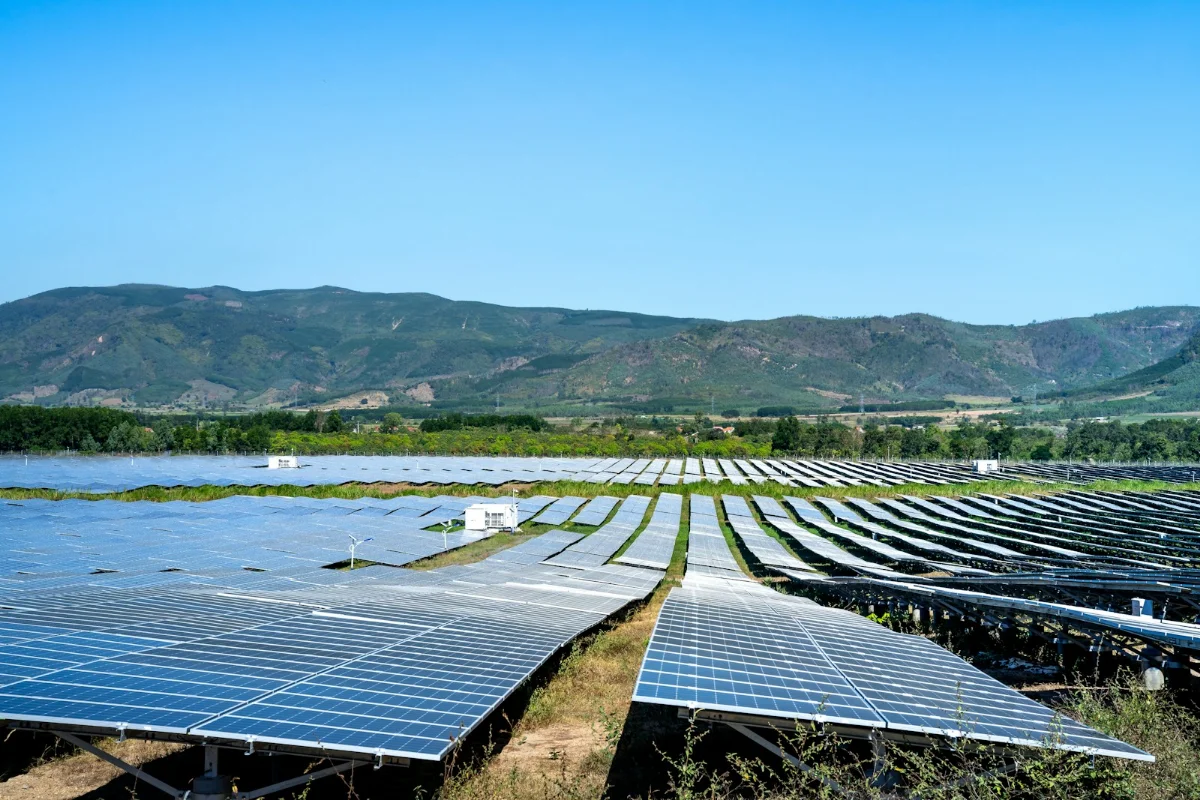
Remote curtailment for unlicensed solar
At the heart of the package is the midday surplus. The Grid Code made unlicensed plants a party to emergency measures in December 2025; the October package builds the mechanism. The system operator’s emergency load-shedding instruction goes to the regional incumbent supplier and to aggregators, and the distribution company or OIZ applies it to the unlicensed plant.
Under the new paragraph in article 75 of the DUY, the incumbent supplier creates a single settlement unit (UEVÇB) for the unlicensed plants in its region. Instructions are applied among plants of 900 kW or more in installed electrical capacity, starting with the largest and moving down; the text sets no order for plants below 900 kW. Among plants of equal electrical capacity, those with higher mechanical capacity, then earlier first acceptance, then an earlier connection agreement come first. The order starts with the incumbent supplier’s portfolio, and the incumbent supplier sends the list of plants in scope to the distribution company or OIZ. The distribution company or a distribution-licensed OIZ can switch a plant off remotely and must notify the producer by phone and durable medium within 15 minutes after the emergency ends. Re-energising the plant is the producer’s responsibility. Aggregators build their own remote control systems for their portfolios.
Under new paragraphs in the OIZ Regulation, distribution-licensed organised industrial zones must apply these instructions and pass data on unlicensed plants and compliance to the incumbent supplier. OIZs must also follow TEİAŞ’s instructions under the emergency measures of the Grid Code and report the data it requests completely and on time; an OIZ that does not comply faces the sanctions in article 16 of Electricity Market Law no. 6446.
Sanctions have two layers. No payment is made for the output corresponding to the part of the instruction that was not followed; the amount is recovered from the producer and deducted from the total cost of YEKDEM. Penalty clauses added to the connection agreement by decision 14909 target plants that fail to install SCADA or cannot be switched remotely because of a fault. For producers that do not apply for the revision within 60 days, the Board-approved agreement provisions in force apply; not applying is no way around the new terms.
How the unpaid amount is calculated varies widely with the plant’s support status. For a solar plant within its ten-year support period the reference is the price in the YEK Law schedule: 13.3 US cents/kWh for plants commissioned before 2021. For plants past their support period the price in Presidential Decision 11415 applies: 90% of the YEKDEM price, capped at the hourly PTF. For plants paid for excess generation at their consumer group tariff, the tariff price of that group and tier applies. Since the PTF is usually close to zero in emergency hours, the real deterrent for these plants is the penalty clauses that apply after April 2027.
The unlicensed regulation also makes two netting adjustments. Payment for excess generation is now explicitly tied to the volume left after the market operator’s hourly netting. Where generation and consumption are not in the same distribution region and the associated consumption is connected to transmission, own consumption will be billed at the single-rate retail energy tariff for transmission users.
KGÜP discipline in YEKDEM
For licensed plants in YEKDEM the most important change is in article 23 of the regulation. The rule applies in two situations: in settlement periods when the plant receives a down-regulation (YAT) instruction in an emergency or in the balancing market, and in periods when the PTF or SMF is below V and the system is in surplus. In these periods expected net generation is taken as the plant’s KGÜP minus YAT, plus up-regulation (YAL) instructions, the net imbalance caused by secondary frequency control and the reserve provided in limited frequency sensitivity mode. Output above that does not count as YEKDEM generation if the PTF is below the YEK price plus any local content bonus. A part of an instruction reported as not delivered during reconciliation is not deducted; the full instruction counts.
In hours when the PTF falls below V this condition is met in practice every time. A plant that does not submit a KGÜP is treated as having a KGÜP of zero, so all its output in that hour falls outside YEKDEM. The rule is stricter for local content payments: for plants commissioned after 30 June 2021 that receive the local content bonus without being registered in YEKDEM, and for the local content payment on capacity increases under article 6/C, output above the expected level in these periods is not counted, whatever the PTF. A similar rule that applied only on public holidays other than Sundays was repealed and replaced by this general rule for every day.
Generating above KGÜP in surplus hours is no longer paid by YEKDEM.
The imbalance side points the same way in those hours. Under the DUY, when the lower of PTF and SMF is below V, a positive imbalance creates a charge of B rather than revenue. In spring middays when the PTF drops to zero, the right strategy for a YEKDEM wind or solar plant is now clear: submit a realistic KGÜP and manage the surplus with a YAT bid or by curtailing output.
The other changes to the YEKDEM regulation are more technical. In hybrid plants with storage, energy under YEKDEM is tracked with virtual records capped at the capacity in operation; once capacity is full, newly stored energy reduces existing records proportionally. For a plant that joins YEKDEM later, energy held in storage when it joins is not paid by YEKDEM even if it is discharged afterwards. Plants commissioned after 30 June 2021 that are not registered in YEKDEM and use local components receive the local content bonus as a YEK payment. If misleading or forged documents on the support conditions are found in the pre-licence, licence or acceptance process, the plant is removed from that year’s final YEK list and the sanctions in article 16 of Law 6446 also apply. Repayment is no longer output times the YEK price but the YEK payments actually made, each updated from its payment date at the rate in article 51 of Law 6183. Periods with a negative YEK payment, when the plant paid into YEKDEM, count as zero, so the plant cannot deduct those payments from the repayment. If the Ministry finds that a component does not qualify for the local content bonus, the bonus paid for it is also recovered, updated at the same rate.
Imbalance: V from 150 to 100
In the imbalance formula in force since 1 January 2026, V is a threshold for low-price hours. A shortfall is priced at no less than V. For surplus generation, if the lower of PTF and SMF is below V, output earns nothing and instead creates a charge of B per MWh, i.e. 100 TL/MWh plus the coefficient. Decision 14911 lowers V from 150 to 100 TL/MWh from the billing period after its publication, that is from November 2026.
Shortfall: EDT− = EDM− × max(V, PTF, SMFn) × (1 + k)
Surplus: if min(PTF, SMFp) < V EDT+ = −EDM+ × B × (1 + l)
otherwise EDT+ = EDM+ × min(PTF, SMFp) × (1 − l)
Illustrative calculation. The system is assumed to be in surplus in all three cases: l = 6% for surplus generation, k = 3% for a shortfall; B = 100 TL/MWh. The special rule at the price cap is not shown.
The effect cuts both ways. In hours when the PTF is between 100 and 150 TL/MWh, surplus generation moves from a charge back to revenue; the floor price for a shortfall falls by a third. In hours when the PTF drops to zero nothing changes. The 19 October DUY amendment also books imbalance receivables and payables gross per settlement period rather than net per month: the net amount stays the same, but the payable side grows.
KÜPST: wider scope
The charge for deviation from the final daily generation programme (KÜPST) prices a plant’s deviation from its KGÜP beyond a tolerance. Decision 14907 leaves the tolerance for wind and solar unchanged at 15% and 8%; these values have applied since 1 January 2026. The big jump happened then; today’s change is in the formula and the scope.

UDÜPS = |(UEVM − UEÇM) − BUDÜP|
KÜPSM = UDÜPS − m × BUDÜP (if UDÜPS > m × BUDÜP; otherwise 0)
KÜPST = KÜPSM × max(PTF, SMF) × n
The deviation is now calculated on a net basis: injection minus withdrawal, compared with the net plan. This stops charging and own consumption from looking like deviations at hybrid and storage plants. Distribution-connected unlicensed plants (through the incumbent supplier’s or the aggregator’s settlement unit) and standalone storage come into scope for the first time; consumption units follow from 1 January 2027.
An example: a 10 MW wind farm that notifies 6.0 MWh for an hour and generates 4.5 MWh deviates by 1.5 MWh against a tolerance of 0.9 MWh. The 0.6 MWh above the tolerance, at a price of 3,000 TL/MWh and a coefficient of 0.05, creates a KÜPST of 90 TL. The same deviation cost 43.2 TL in 2025 with a 17% tolerance and a 0.03 coefficient. For wind and solar the cost roughly doubled at the start of this year; nothing changes that from November.
Illustrative calculation. max(PTF, SMF) = 3,000 TL/MWh, no instructions or reserve adjustments, fewer than 30 outage entries in the month.
KÜPST for suppliers too
The least discussed consequence of the package concerns supply companies. With the 19 October DUY amendment, notifying a KGÜP and available capacity became an obligation for every settlement unit (UEVÇB), including consumption and storage, not just generation. A supplier with a consumer portfolio must notify, for each settlement unit, the next day’s consumption programme per settlement period by 15:30 every day; it can update the programme until half an hour after the intraday market closes. This obligation took effect on publication.
From 1 January 2027, decision 14907 also links deviations from this programme to KÜPST. The calculation mirrors generation: the gap between metered withdrawal and the notified programme, to the extent it exceeds the tolerance, is priced at max(PTF, SMF) × 0.01. The tolerance is 75% for the regulated portfolios of incumbent suppliers (non-eligible consumers and eligible consumers that have not chosen a supplier, for example) and 30% for all other consumption units, including eligible consumer portfolios. A supply licence holder that only trades and has no consumer portfolio has no consumption unit, so this charge does not arise.
Illustrative calculation. Eligible consumer portfolio (30% tolerance), max(PTF, SMF) = 3,000 TL/MWh, price coefficient 0.01. The last row assumes the plan is taken as zero in an hour with no programme notified; EPİAŞ’s 2027 settlements will confirm the practice.
The amount looks small: each MWh above the tolerance costs only 1% of its energy value. The real risk lies in two places. The first is low-consumption hours and portfolios with behind-the-meter solar: where consumption drops sharply at midday, a 30% tolerance is easily exceeded. The second is notification discipline: in an hour with no programme, the whole consumption counts as deviation, and participants that habitually fail to notify a KGÜP are also reported to EPDK for sanctions under article 16 of the Law.
Balancing moves towards 15 minutes
In the DUY, references to the “hour” in the balancing power market (DGP) became “settlement period”. The DGP settlement period was defined as 15 minutes in 2025, with the proviso that it would not start before 1 January 2027. The October amendment completes the legal groundwork for this transition; imbalance settlement stays hourly.
The split has a cost. In the imbalance formula a shortfall is priced at the hour’s highest SMF and a surplus at its lowest. Once the SMF is split into four quarters, the gap between the two widens. With quarter-hour SMFs of 1,800, 2,400, 3,100 and 2,000 TL/MWh, a shortfall settles at 3,100 and a surplus at 1,800 TL/MWh; with a single hourly SMF the gap is much narrower.
For wind and solar the most interesting article is the option to become a balancing unit in one direction only, for example down-regulation. In surplus hours, instead of curtailment without an instruction or a B charge, output can be reduced through a YAT bid at a price the plant sets itself. Implementation depends on TEİAŞ’s assessment. Aggregators also get a registration rule: a plant can join an aggregator portfolio only after at least one unit has passed Ministry acceptance and its settlement unit records are complete on the transfer date.
Storage: from MWh to MW
The clearest gain for storage investors is that capital and collateral are now calculated on power (MWe) rather than unit capacity (MWh). Under the Licensing Regulation and decision 14912, amounts for hybrid and standalone storage applications are based on power. For a four-hour battery the burden falls to roughly a quarter.
Illustrative calculation, using the unit investment amount of 4,200,000 TL in decision 13134 and the supply or aggregator licence formulas: capital P × BYT × 0.20; collateral BYT × [2.1 + (P − 100) × 0.01].
In exchange, getting collateral back at hybrid plants becomes harder. The collateral submitted with the licence application is now returned only once the whole facility is in operation; even if the solar or wind part is commissioned, the collateral stays blocked until the storage is complete. For the storage units, the refund takes into account the power of the accepted storage unit; where storage is built smaller than licensed, the text does not make clear whether the difference is returned or forfeited. If the committed storage is not built within the licence period, the collateral is already forfeited except in cases such as force majeure. That makes a “build generation first, defer storage” approach more expensive.
An important cap has also gone for behind-the-meter storage. Consumers can now install batteries larger than their contracted capacity, provided they fit an automatic power control and cut-off system that prevents export to the grid and limits withdrawal to the contracted capacity. Storage integrated with unlicensed generation stays limited by electrical power but can be built without a capacity (MWh) limit. Standalone storage was brought under emergency instructions and given light KÜPST coefficients.
One provision that was in the June draft but not in the final text should also be noted: applying the fixed system use fee in one direction only for standalone and hybrid storage. It is absent from the published text; how the fixed fee applies to storage remains an open question.
Licensing, collateral and demand response
A new paragraph in the Licensing Regulation matters for stalled projects. If an event the Board previously accepted as force majeure becomes permanent and prevents completion of the investment, it is no longer assessed under the force majeure article. For pre-licences and licences that have waited years on environmental permits, zoning or grid connection, the route to extensions narrows.
The Connection Regulation makes two procedural changes. A distribution-connected licensed plant cannot ask to leave the distribution system while its licence runs; to move to transmission it first amends the connection point in its licence. An applicant that chooses to build the required distribution grid itself signs the construction contract within 30 days of the connection agreement rather than at the same time.
Article 132/C of the DUY gets tougher for projects with land disputes. Where a pre-licence or licence holder fails to pay the compensation, costs or enforcement amount arising from lawsuits or enforcement proceedings brought against EPDK or the ministry handling the expropriation over project land, EPDK sets a payment deadline; after it, the company’s market receivables have been transferred to the Authority since 1 January 2026. Now, until the debt is paid, the company cannot notify bilateral contracts as a seller and its forward sale notifications are cancelled. It cannot join an aggregator portfolio or a balancing group; if it is in one, it is removed in the first billing period after the notice, and if it is the group’s responsible party, the group is dissolved. These receivables go to the Authority before any other use. For bilateral buyers and aggregators this is a new counterparty risk.
For suppliers the change cuts both ways. The maximum ratio used to set system use collateral with the distribution company falls to at most one times for users that have paid their system use bills in full over the past 24 months and have not defaulted on collateral; the distribution company must return the resulting excess by 19 November without waiting for a request. Collateral can now also be given as an electronic letter of guarantee. The rule is permanent too: excess collateral is returned within 10 working days on request, and a call for additional collateral gives 10 working days. The distribution company reports to EPDK any user whose collateral falls short of the required amount by 20% or more and who does not make up the gap. On the other hand, after the 21 October amendment a participant that fails to meet a collateral call at EPİAŞ can trade neither in the day-ahead and intraday markets nor in bilateral contracts and futures. The Licensing Regulation also widens a branding rule. Since April 2026 suppliers other than the incumbent supplier, and aggregators, could not use the distribution region’s name in their company name or the distribution company’s brand and logo, with a compliance deadline of 31 December 2026. Now any name, brand or logo that may suggest a link to the distribution company is also banned. The October amendment sets no separate transition period, and the text does not make clear whether the 31 December 2026 deadline also covers the wider scope.
Demand-side participation under the Ancillary Services Regulation was redesigned. The effect of hours rated “did not participate” is no longer confined to a single hour; the monthly capacity payment is cut by the share of those hours in total instructed hours. Curtailing more load than instructed now has its own scale: an excess of up to 50% of the instruction counts as delivered, while a larger excess counts as not delivered and no activation payment is made for that period. With TEİAŞ approval at least one hour before the activation instruction starts, an excess above 50% also counts as delivered. For shortfalls the thresholds are unchanged: up to 10% delivered, 10% to 25% not delivered, 25% or more did not participate. The capacity tender announcement must now also cover a document, to be approved by the distribution company, with the meter data and contracted capacity of distribution-connected consumption sites. Availability checks, allowed at most twice in the critical months for one hour each, now instruct load reduction in equal proportion rather than equal amounts. The date from which TEİAŞ itself runs ancillary service performance tests and issues the certificates moved from 1 September to 31 December 2026; until then tests can be run by non-accredited firms provided a TEİAŞ observer is present.
For investors
The package gives a clear answer to who bears the cost of the midday surplus: whoever creates it and does not stick to the plan. For a YEKDEM plant the KGÜP is no longer a formality but part of revenue; for an unlicensed plant, SCADA and remote control are a penalised condition of the connection agreement. When valuing a solar plant, curtailed output in surplus hours, MWh that go unpaid and the B charge now belong in the model.
The picture is more positive for storage. MWe-based capital and collateral make long-duration batteries cheaper, the size limit behind the meter is gone and standalone storage gets light KÜPST coefficients. Every MWh taken in surplus hours and moved to the evening peak is the mirror image of output that turns into a charge in those same hours; the package widens that gap.
At Frekans we are mapping the SCADA and remote control status of every unlicensed plant in our aggregation portfolio and sharing a plan with our investors to close the gaps before April 2027. At the plants we manage we submit KGÜP under the new rules for surplus hours, and for hybrid projects at the investment stage we are adding MWe-based collateral and the blocking period to the financing model.
What takes effect when
Most of the regulation changes in the package took effect on publication. The monetary changes to imbalance and KÜPST start with the November 2026 billing period, and KÜPST for suppliers’ consumption units starts on 1 January 2027. The table below brings all the dates together.
In the board decisions, “the billing period following publication” means 1 November 2026, as a billing period is a calendar month. The imbalance coefficients did not change in this package: 6% in the direction of the system, 3% against it and 3% both ways when the system is balanced (Board Decision 14030, in force since 1 January 2026).